Written by Lucky Byfleet
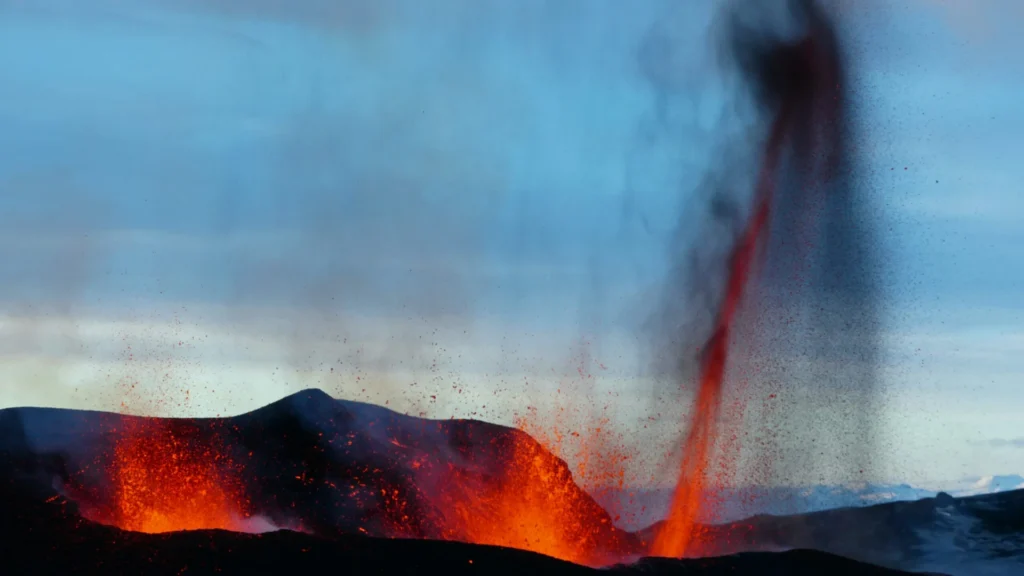
Iceland is 10-14% glacier, and Greenland 80% covered in ice. But Iceland is called Iceland and Greenland is called Greenland. What went wrong?! A common misconception is that the people who discovered Iceland wanted to selfishly keep it for themselves. “Keep going West!” maybe they’d shout to the boats trying to land on our rocky, steamy shores, “Nothing but ice here, but there, there’s GREEN land! You will love it! Okay bye!” or whatever was the Viking equivalent. (It would be pretty close to the modern Icelandic equivalent – the language has barely changed in the last 1000years!)
Whilst this isn’t correct there is a grain of truth in it, and the actual answer is unexpected.
Currently Icelanders call Iceland Iceland, written Ísland, and pronounced Ee-sland, but Greenlanders do not call their country Greenland. In their Inuit language it is called Kalaallit Nunaat, which means “Land of the People.” The names we use come from our Norse ancestors.
What makes Greenland green?
Greenland is more North, South, East, and West than Iceland. A thousand years ago, when Erik the Red found it, having been kicked out of Iceland for killing three people in a feud, the Earth was having a warm period. We know, by looking at seashells archaeologists dug up, that the south of Greenland was much warmer than it is today, and that is where we find ancient Viking settlements.
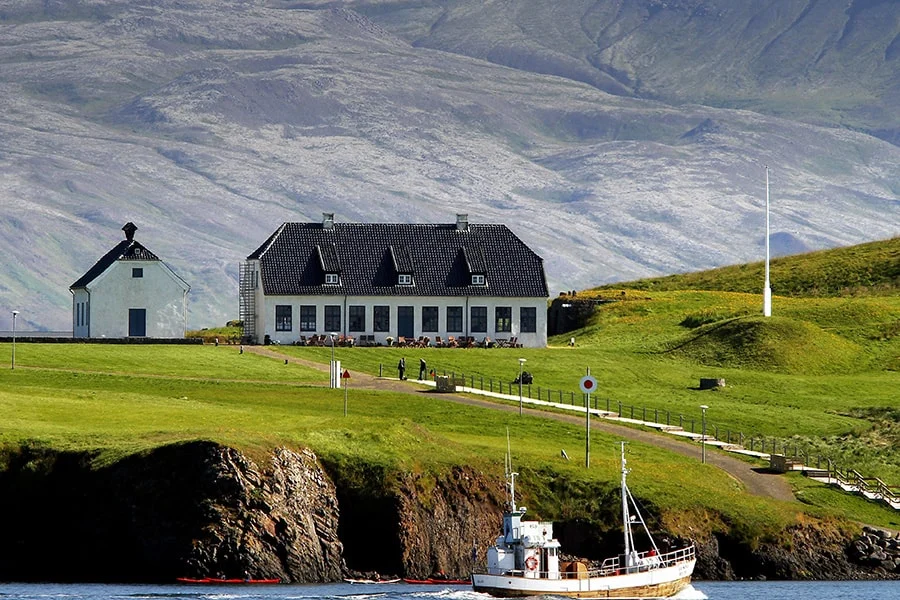
So when Erik tried to encourage people to settle there too he wasn’t lying by saying it was green. But it does seem like a conscious decision, as in the Icelandic sagas he is said to have said that a more pleasing sounding place would make it seem like a more favourable place to settle. Which makes sense! This ‘name it as you see it’ is the Viking way. For instance, Reykjavik means smokey bay, and with all the hot springs steaming here you can see why.
Vikings evidently did appreciate the name ‘Greenland’ and they settled there, hunting walrus for ivory to trade back to Norway. They needed the trade routes to survive, so when walrus ivory was surpassed by elephant ivory, brought up in new trade routes from Africa, they became less well off. Even when the earth entered a cold phase, making more ice in the south of Greenland, they stayed there for another hundred years, hunting seal as well as farming in the ever shortening summer season.
However with less ivory being bought, harsher conditions, the black death in Europe damaging trade, and bad weather – which can wipe out a huge percentage of a population if a storm comes up when people are at sea for example – eventually the settlement failed. The Inuits who arrived after the Vikings succeeded, they were independent, more flexible, and more focused on hunting instead of farming.
So now we know why Greenland is called Greenland because it really was green….but Iceland is not covered in ice, so why is it called Iceland?
Iceland has famous sagas, ancient stories, often involve real people and events, that teach us many things, including why Iceland is called Iceland. One of these tells of a man called Flóki who came to Iceland. Really he came to a country called Garðarshólmur (Garðar’s Isle), as that is what Iceland was called at the time. Previously, it was also called Snæland (Snowland). Flóki wasn’t the first to find Iceland but it hadn’t been fully settled as it later was. Sadly, on his journey, his daughter drowned, and when he finally arrived there was a long cold winter, colder than normal, that meant all his livestock starved to death.
Understandably, Flóki became depressed, and it didn’t get much better after he climbed a mountain, to see if there was anything good out there. The story says that all he could see was a fjord full of icebergs (that had probably washed over from Greenland). Upon his return to Norway, he referred to Garðarshólmur as Iceland. Because to him all that was there was lots of ice!
Despite him telling everyone how icy it was another crew member told everyone it was so rich that even the grass dripped with butter. People became very interested, and so the name Iceland stuck. Soon people came to settle there in numbers and refer to themselves as Íslendingur (a man from Iceland in the court of Norway.)
So Iceland is called Iceland because of a depressed man down on his luck. Had one of the other names for it stuck we could be living in Snowland right now! If it was up to you what would you have called Iceland? Would you name it after yourself, or the landscape, or what you hoped it would be?

Expert guide and marine enthusiast at Sea Trips Reykjavík.