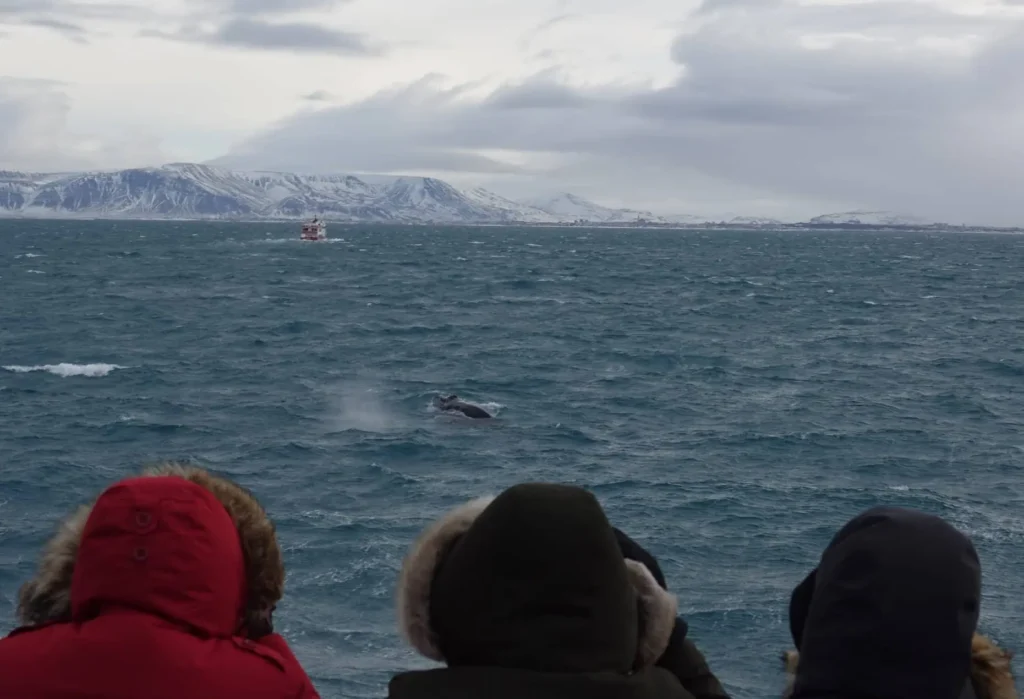
Blue Whale – (Balaenoptera musculus)
The blue whale is thought to be the largest animal to have ever lived, even larger than dinosaurs, and it is, for many, a lifelong dream to see these truly awesome creatures in real life. They can grow to up to 33metres in length , the females being larger than the males, and pre-whaling these mighty creatures were abundant in nearly all the oceans. Sadly, due to whaling in the 20th century they were almost hunted to extinction. Thankfully the whaling moratorium in 1967 happened just in time for this incredible animal, and they are now protected, though still an endangered species.
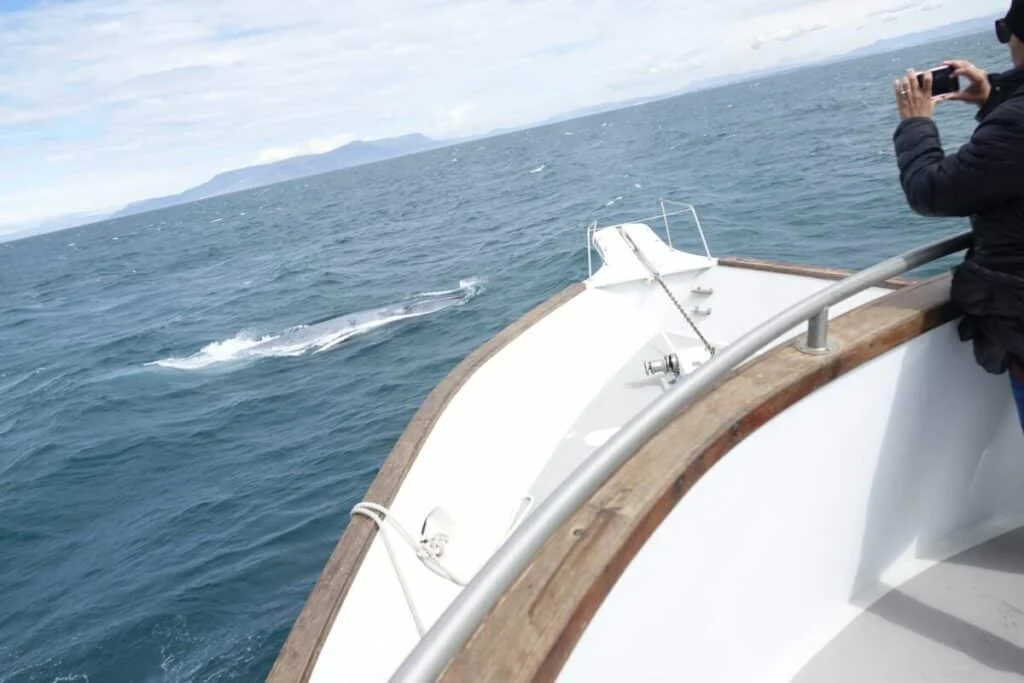
Only the front of the whale is visible here…it was huge!
In the North Atlantic, the body of water around Iceland, there is thought to be at least 1000 individuals, and on a very special Independence day in 2019 two of them came to play with our yacht, rolling on their backs, blowing bubbles and circling us. We were concerned by the boats in the area but the playful nature of these incredible creatures made it evident they weren’t bothered. For a crew used to seeing giant cetaceans these creatures, almost the length of the yacht totally blew us away.
Blue whales were once thought to be quite fat looking – which can be seen by the famous model in the Natural History Museum in London. We had sent people into space before we had videos of this creature swimming underwater, so all original drawings and models came from beached or killed whales, and out of the water their bodies do look more bulbous. However now we have seen them with the water pressure around them, swimming free in their natural habitat and we know they are long and slender.
They are a mottled blue-grey colour which appears light blue under water—hence their name, the blue whale. The mottling pattern is unique to each whale and can be used to identify individuals. Whilst they normally move slowly they must be able to speed up fast in order to catch their prey, but that movement uses a lot of energy, luckily the pay off is good. In one mouthful of krill (a small shrimp like creature) they can consume 457,000calories… in comparison humans need to eat about 2000 a day.
We don’t know a lot about blue whale mating and calving, however we know they gestate for almost a year before being born in the winter. Some nursing grounds have been identified and mothers will keep their young there for 8months, fattening them up with extremely rich (about 30-40% fat) milk. In that time they double in size, gaining the weight of a human every day!
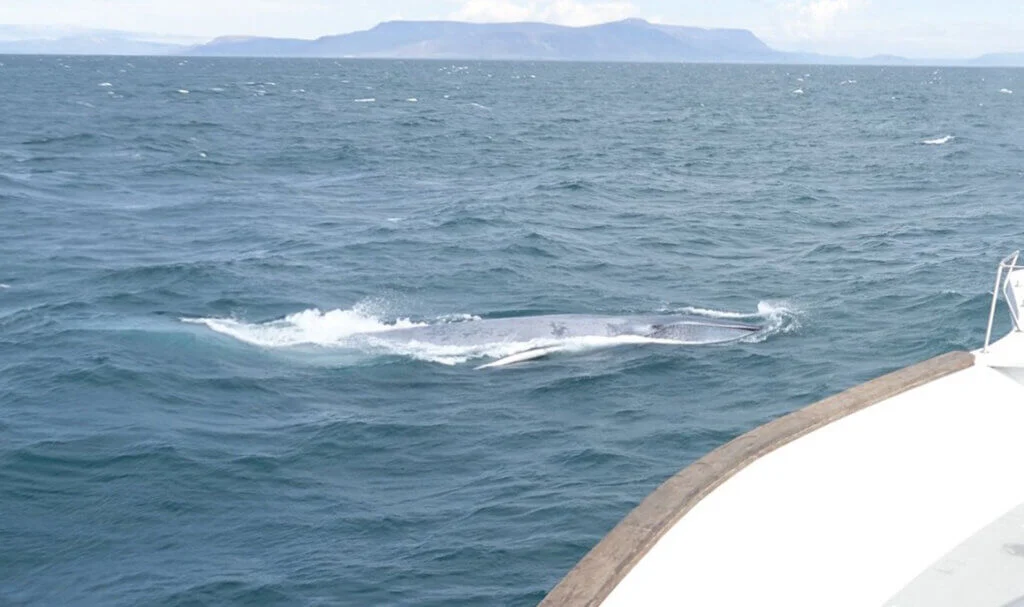
The only known natural predator of the blue whales are the killer whales, however the adults are normally big enough and fast enough to escape, and only a juvenile has been observed to be successfully hunted. The greatest threats to the blue whales is entanglement in fishing gear, boat strikes and, of course, plastic and noise pollution in our oceans. However numbers seem to be rising slowly across the world, so there is hope for the future of these wondrous creatures.
Learn how to spot these amazing creatures with our guide viewable here.

Expert guide and marine enthusiast at Sea Trips Reykjavík.