
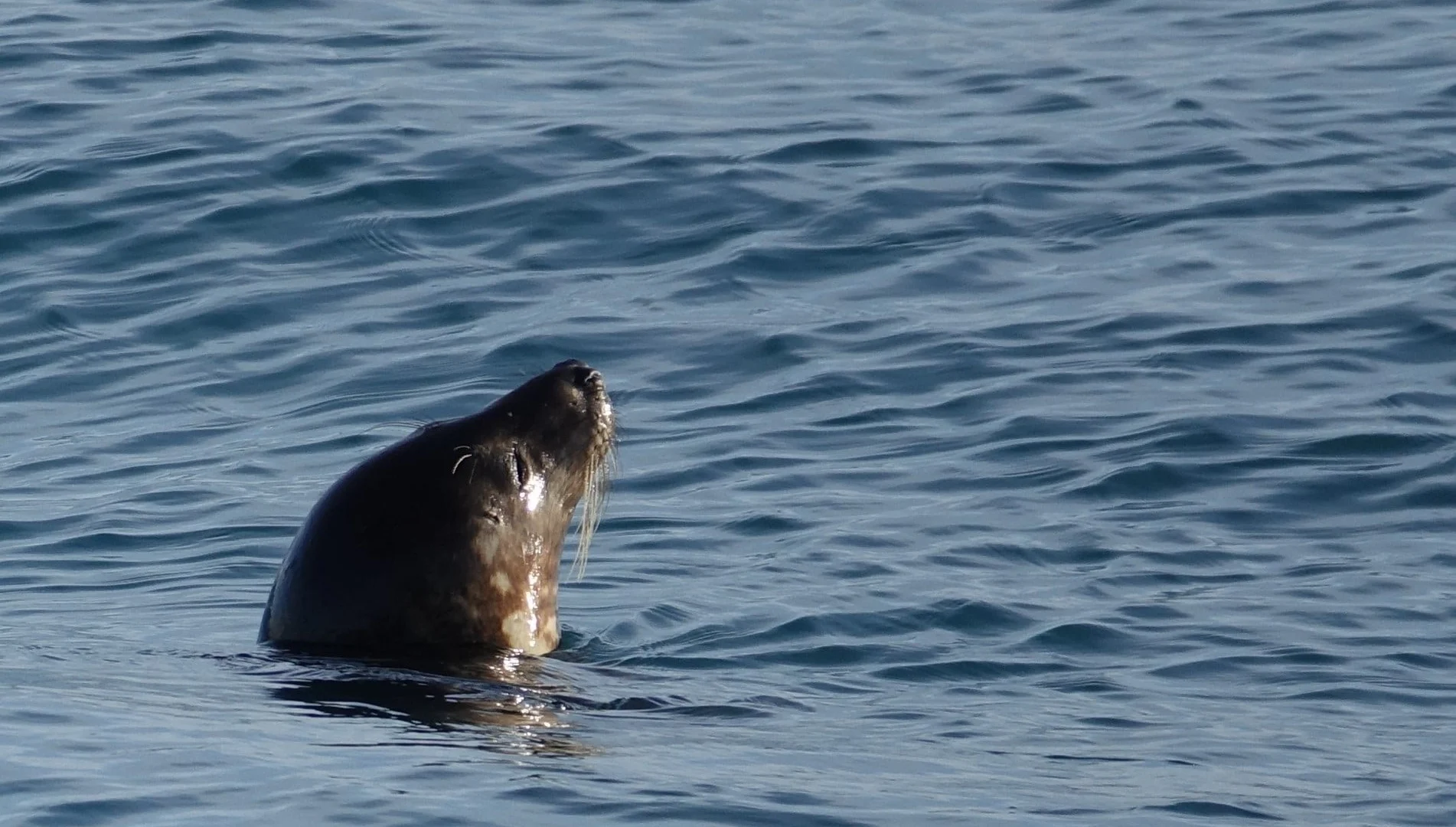
Harbour Seal -(Phoca vitulina)
The harbour seal is often found, as its name suggests, in coastal waters of the northern hemisphere. It is also referred to as the common seal, and is a true seal, as supposed to eared. Known for their friendly, inquisitive nature towards humans people sometimes refer to them as sea-dogs.
They have a range of colours, ranging from brown or tan to silver and grey. Females live for about 30-35 years and the males ten years less. They can reach lengths of 1.85m, the size of a large human, but they weigh considerably more – up to 168kg, as they have a thick layer of blubber under their skin to maintain their body temperature.
Harbour seals can spend several days at sea, travelling up to 50km to get to feeding grounds, but they will also swim up rivers to hunt for migratory fish such as salmon. Mostly they hunt fish, but will also eat squid, mollusks, and crabs as well as ducks.
Females bear a single pup after a nine-month gestation, which they care for alone. They can swim and dive within hours of birth and gain in size fast, and are weaned from their mother at only 4- 6 weeks having doubled in size. Whilst harbour seals are gregarious when they are hauled out, which they do to rest when they aren’t feeding, and they may gather together during the breeding season they do not form groups as large as other pinnipeds.
Threats to harbour seals include disease, hunting, entanglement, pollution, and fishing as by catch, but from nature they are also preyed on by killer whales.

Expert guide and marine enthusiast at Sea Trips Reykjavík.


