Atlantic Puffins – (Fratercula Arctica)
While Atlantic puffins, sometimes referred to as common puffins, are undoubtedly the stars of Iceland’s seabird scene, there’s more to these charming birds than meets the eye. As members of the auk family, they share a lineage with the now-extinct Great Auk, whose last mating pair met their fate on Eldey island, off Iceland’s south coast, in 1844. Today, Iceland’s islands continue to serve as vital breeding grounds for seabirds, including the beloved Atlantic puffin.
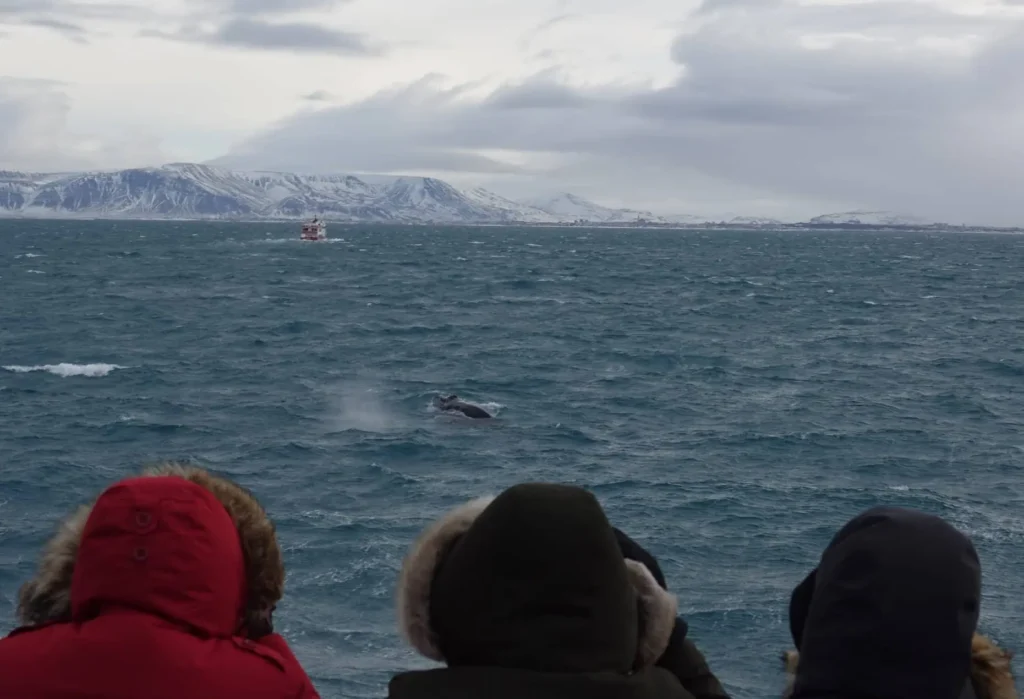
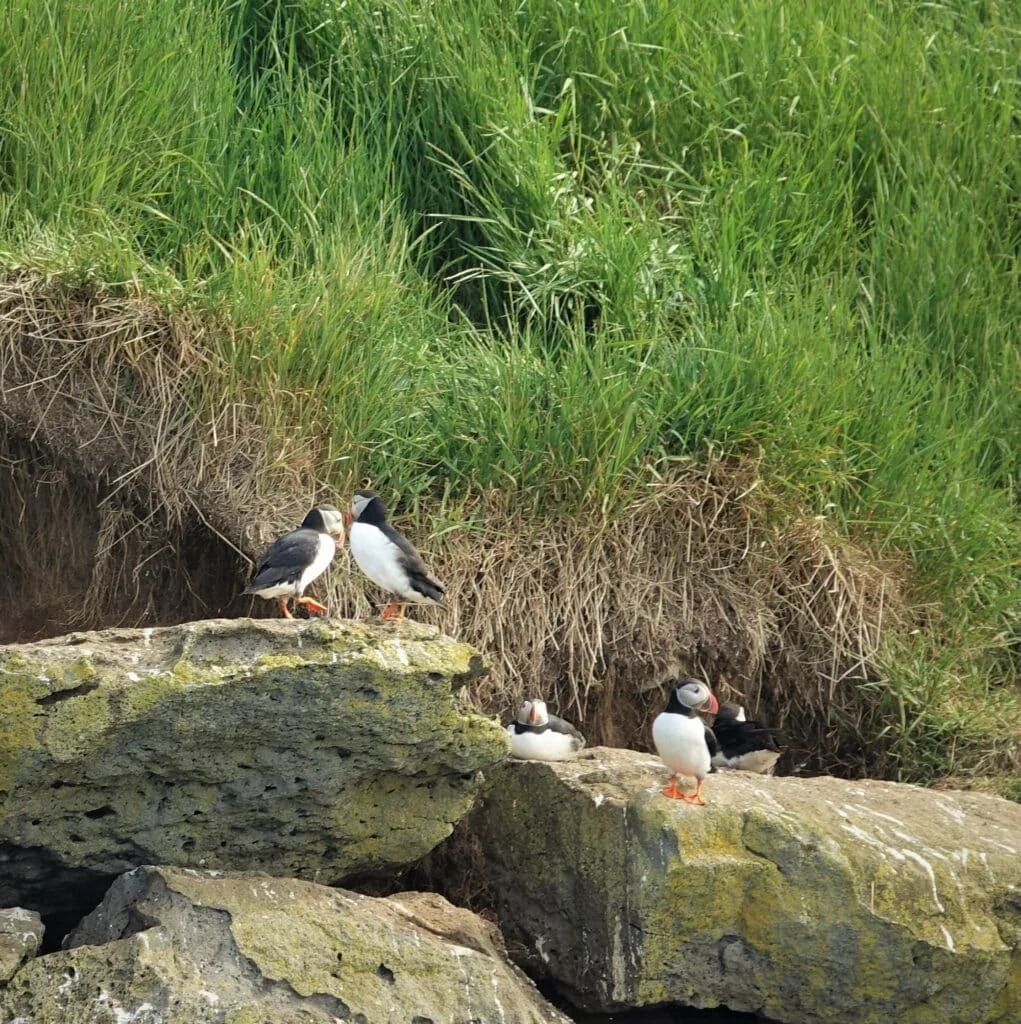
With an estimated population of over 8 million puffins during the summer, Iceland hosts the largest colony in the world, making it an unrivaled destination for bird enthusiasts. During breeding season we love to go out and see them on our Puffin Watching Tours but we often see them when we go Whale Watching too. To get up close to them on the islands we take our RIB boat, but no one is allowed to step onto the island to make sure the puffins are not disturbed and so continue to nest here for years to come.

Atlantic puffins don striking black crowns and backs, pale grey cheeks, and white undersides. During the breeding season, their broad beaks transform into vibrant shades of red and black, while their legs turn bright orange. These colorful beaks aren’t just for show; they play a crucial role in attracting mates and identifying one another. Interestingly, during their winter sojourn at sea, puffins molt, adopting a much duller appearance to the extent that they were once considered a different bird altogether.
Each year, these puffins embark on an incredible journey, returning to their Icelandic breeding grounds after spending the winter at sea. During the breeding season, males and females engage in captivating courtship displays, including head tilts and beak snapping. Once paired, these lifelong mates take turns incubating a single egg, which hatches in about six weeks.
Their offspring, endearingly known as ‘pufflings,’ are nourished with small but whole fish and grow rapidly. After just six weeks, they’re fully fledged and, guided by the light of the full moon, set out to explore the cold northern seas. They won’t return until they’re ready to breed, which typically takes 3-5 years.
As they often nest on islands they are mostly free of land-based predators, but can be attacked by large gulls from above, or animals like seals when they are swimming. Often they are harassed by other sea-birds in order to steal the fish filling their mouths as they return to the burrows to feed their young.
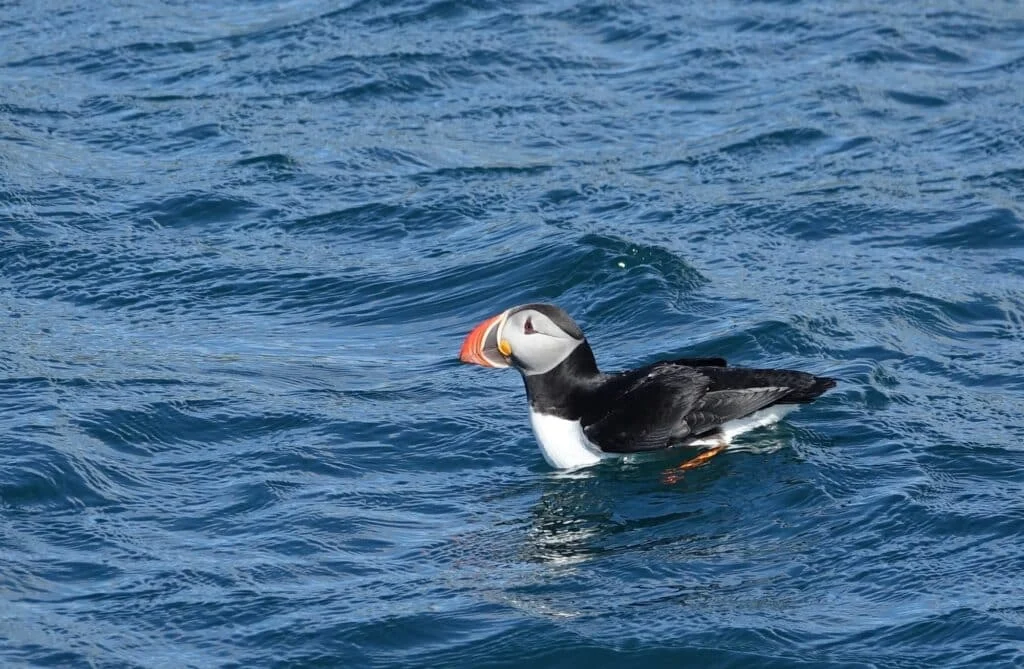
Despite their reputation as the “clowns of the sea” due to their awkward landings and vibrant appearance, Atlantic puffins are remarkably graceful and proficient creatures. In flight, they must beat their wings a staggering 400 times per minute to stay airborne, but in the water, they truly shine, using their short yet powerful wings to propel themselves. Remarkably, they can dive to depths of up to 60 meters!
Iceland’s puffins need our protection now more than ever! Whilst the adults can eat a range of fish the pufflings need tiny ones, and if the population of those fish drops that means there isn’t the food to raise their young so they don’t survive. Additionally, human activity disturbs them, and the predation by introduced mammals pose serious threats to their breeding success. Whilst traditionally Icelanders hunted these awesome birds, now it is almost entirely tourists that eat them.
While these resilient birds have faced challenges in recent years, primarily due to climate change and overfishing, Iceland has taken proactive steps to protect their population. Protected areas and fishing regulations have been put in place, with ongoing monitoring and awareness campaigns aimed at both locals and visitors. Despite these efforts, the puffin population has declined by 70% in the last 30 years. So, as a plea to all, let’s join hands in safeguarding these incredible birds and refrain from consuming them.

Expert guide and marine enthusiast at Sea Trips Reykjavík.